BioBM's Life Science Marketing Blog
Browse by topic
Showing 217–240 of 262

Use Google Alerts
I'm guessing most companies do, but I've ran into a few that aren't so I feel the need to say it here: use Google Alerts. For any small company, life science companies included, Google Alerts is an easy and free way of monitoring what is said about your company online.

Business Plans for Scientists
If you have a great biotechnology innovation and you want to start a company to commercialize it, you're almost certainly going to have to write a business plan.
Misconceptions About SMM
There are a lot of misconceptions about social media marketing out there. I was recently reminded of it by a tweet from a company which will remain nameless.

Presenting your Marketing
Life science marketing is an interesting thing. It is most often supported by a wide breadth of technical information, and scientists often want a lot of information, but at the same time most of the "standard" rules of marketing still apply.

Online Leads: It’s All About Speed
Almost all life science companies market via the internet these days. Of those, a vast majority have a method of capturing leads online – be it a contact form, an e-mail address, or even a post on the wall your company's facebook page.
Site Metrics: Where to Focus?
Website analytics can provide very useful information to bioscience companies. It can be used to assess the effectiveness of your marketing messages, optimize your site navigation, and track external marketing campaigns.
What Inventors Don’t Think Of
Most great life science inventions come straight from the bench. That also means that most great life science inventions come from career scientists, who are most often inexperienced in commercialization.

The Limitations of Referrals
While less common in highly technical industries such as life science tools and services, it's not wholly uncommon for entrepreneurs to "boot-strap" their start-up companies (try to start without external funding and race to become profitable before they run out of cash).

Success in Product Development
For companies, success in life science product development does not mean completed development of a single product, or even successful commercialization of a product. Likewise, triage of one product development project does not equal failure.
Encouraging Action
Life science marketing often involves an abundance of technical information. This is often for good reason – scientists are inquisitive and want to know what they are potentially buying.
Leveraging a Weak Dollar
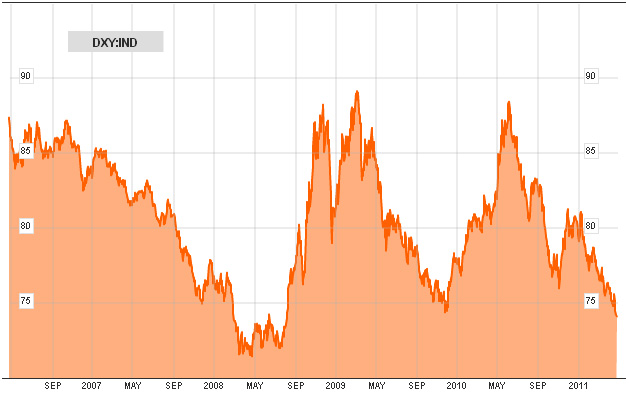
In one of the first posts on our new site we discussed some ways in which life science tools companies can take advantage of a weak dollar, but with a decidedly U. S. -centric focus.
A Note on Off-Site Blogs
Going somewhat in step with our previous post on projecting expertise, I've noticed a recent trend of life science companies starting or sponsoring unbranded, off-site blogs. I have no problem with using such blogs as a marketing tool so long as the strategy for doing so is properly addressed.

Be The Expert
The life sciences are, almost by definition in being a science, a highly technical field. Most life science products, and certainly life science services, are of a similarly highly technical nature. At the same time, experiments are precious and expensive.

The Lost Art of Go / Kill
Great ideas are precious things. They are the fuel driving innovation, the sustenance of progress, the energy that powers success. Not all great ideas are so great in practice, however.
Ion Torrent’s Apple Spoof
So I ran across Ion Torrent's / Life Technologies' spoof of Apple's "I'm a Mac" commercials, where Ion Torrent rips into the Illumina MiSeq a bit … okay, more than just a bit, the Ion Torrent attempts to pretty much tear apart the MiSeq in comparing it to the PGM.

Send the Right Message
Life science marketing can be a difficult task, especially because scientists often don't like to be marketed to. They are particularly adept at identifying marketing and ignoring it.
Benchfly: Innovation 3 of 3
The third post in life science innovation in the laboratory has been published on Benchfly. In this final post in the guest blogger series by BioBM Principal Consultant Carlton Hoyt he discusses some considerations regarding intellectual property and options for commercializing and realizing revenues from a life.

Managing a Product Portfolio
All companies making and / or selling life science tools and services have a product portfolio, but often these portfolios are not viewed in a strategic manner.

Lowering Barriers
Life scientists are busy people. Between bench work, meetings, writing, presentations, seminars, and everything else they may have to do in their day, their time is limited. As such, they appreciate (knowingly or not) situations where the purchasing of products that they need is easy, fast, and simple.
Creating Brand Champions
Branding is an important part of marketing in the life sciences, as we've previously discussed in this blog. The ability to shape and manage the perceptions of your company in the minds of customers is a powerful thing.

Fix the Cause, Not the Effect
In business, problems are an inevitability. No company ever sails completely smoothly to success. In the life sciences and elsewhere, companies often fail to step back to understand their own problems and their own situation as well as they should.
Driving Innovation
What was once "out-of-the-box" is no longer out of the box. As time goes on and progress is made, your company must continuously progress in order to remain competitive.

Acting With Confidence
Small life science companies are surrounded by uncertainty. How can we improve our service to customers? What new product would be of greatest interest to scientists? How can we be more certain that our strategic direction is in sync with future realities? What can we do to add value to our products?
Benchfly: Innovation 2 of 3
The second in the BioBM / Benchfly series on laboratory innovation for life scientists has been published on Benchfly. In this post, BioBM Principal Consultant Carlton Hoyt discusses a "back-of-the-envelope" method for life scientists to ballpark how much their ideas or inventions could be worth to them.
Get the latest Life Science Marketing Insights directly in your inbox
Occasional articles, reports, and practical ideas from BioBM — no spam, unsubscribe anytime. We’ll email a confirmation link before you’re added to the list.